

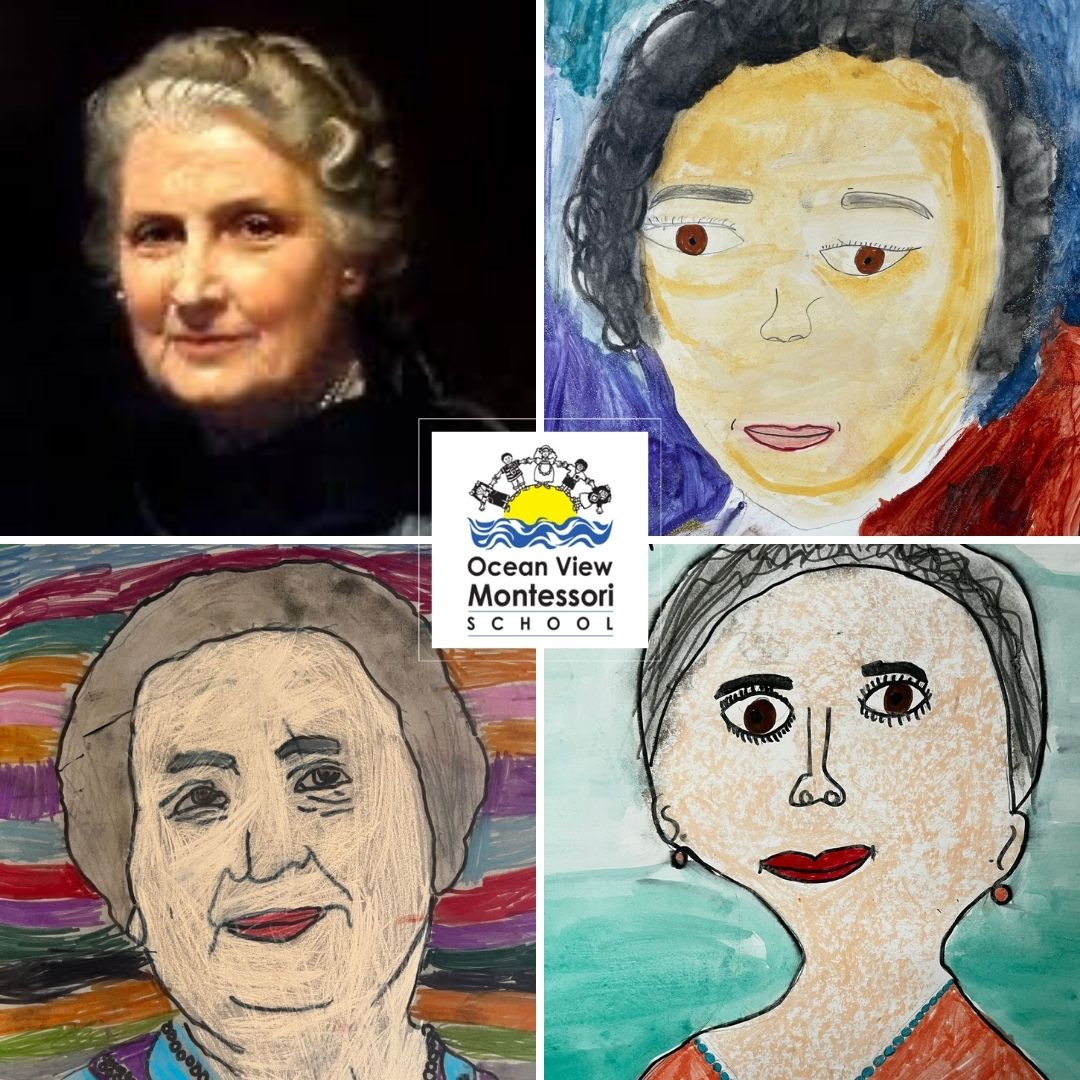
Maria Montessori’s Legacy
On Monday 31 August we celebrated Maria Montessori’s Birthday, she was born 156 years ago
in Italy and died in Holland in 1952, a few months before she was due to make her first trip to
Africa.
She was a visionary educator whose philosophy has stood the test of time due to her very clear
understanding of child development. She recognised that learning is most effective when the child
can choose their area of focus and to explore it through movement and their senses. In response,
she created learning environments and a teaching approach that facilitates both, and promotes
the child’s constructive choices of activities.
Modern research in Neuroscience evidences the outstanding growth that a Montessori education
can provide. If this is something that interests you, click on the link below to take you to an
interesting presentation with paediatric neurologist Dr Steve Hughes.
A new systematic review of the effect of a Montessori Education has set out to pinpoint exactly
what the ‘Montessori Difference’ is in terms of children’s education and well-being. It is a review
of 32 academic studies published between 1967 and 2020 of Montessori-educated students in
eight countries. Students included in the studies range in age from preschool to high school and
come from a variety of socio-economic backgrounds. Each study included in the review compares
Montessori and traditional education to measure which has better outcomes for pupils, both
academically, socially, and emotionally. What did it find? In a nutshell, Montessori education has
more meaningful and positive holistic benefits compared to traditional education.
The data show that a Montessori education provides academic benefits, especially in literacy and
numeracy learning. Furthermore, that Montessori students demonstrated stronger executive
functioning, including self-control and working memory and reported an overall more positive
school experience. A striking finding of the study is that Montessori students are, on average, a
full school year ahead by the end of their primary phase of education.
In non-academic measures, Montessori students also excelled; they demonstrated
stronger executive function, including self-control and working memory, and reported a more
positive school experience overall compared to traditional students. This is a sound affirmation of
our work with children, doing what we love and making a real difference!
As a teacher and school leader, I see the approach to be of increasing relevance for today’s
children. We are in urgent need of a method of education that encourages activity for healthy
minds and bodies, fuels curiosity for learning, boosts emotional intelligence, and connects children
with nature and their communities.


